Category: projects

Sundown Water Treatment Plant

Sundown

Project Overview

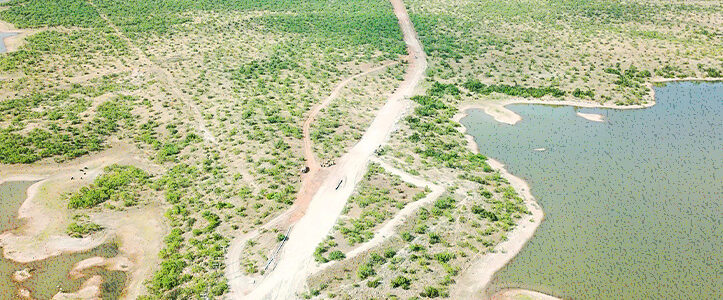
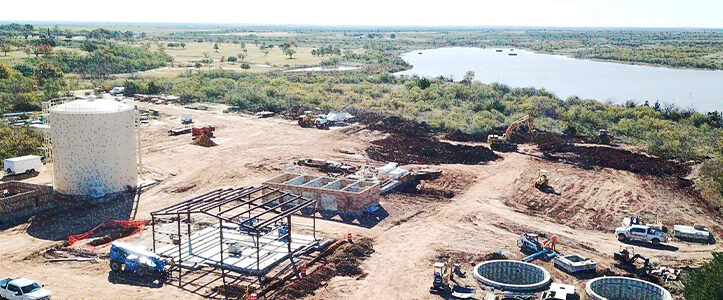
MH Civil Constructors partnered with the City of Sundown and Parkhill to deliver a New Wastewater Treatment Plant, a comprehensive infrastructure replacement designed to secure the community’s utility future. Moving beyond simple repairs, the City utilized the Clean Water State Revolving Fund to finance a complete system overhaul. The scope featured the construction of a new facultative lagoon, an effluent storage pond, a high-efficiency lift station, and a modern irrigation-based effluent handling system, alongside the formal closure of the City’s outdated treatment facilities.

The Problem

  • System Obsolescence: The existing wastewater plant had reached the end of its functional life, requiring a full-scale replacement rather than incremental maintenance.
  • Environmental Compliance: To meet modern standards and secure state funding, the City needed a system capable of sophisticated effluent handling via irrigation.
  • Long-Term Reliability: As a primary municipal service, the wastewater system required a design that ensured operational resilience for decades to come.
  • Decommissioning Needs: The project required a seamless transition from the old plant to the new facility, including the safe and permanent closure of existing infrastructure.

Our Solution

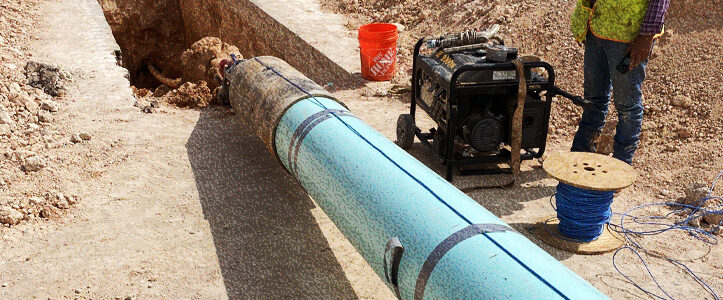
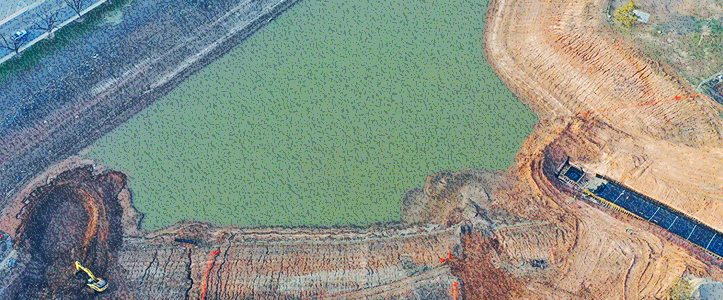
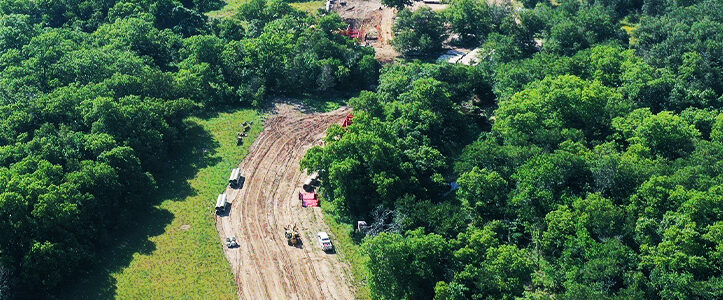
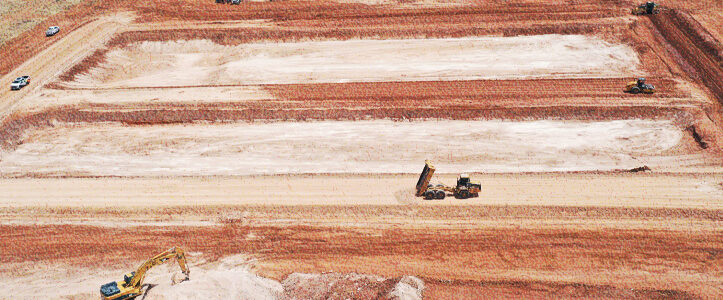
MH Civil managed the end-to-end construction of the new treatment facility, beginning with the installation of a new lift station and 3,268 linear feet of 6-inch PVC force main. The core treatment capacity was established through the placement of over 184,771 square feet of high-performance pond liner and geotextile for the facultative lagoon and storage ponds. To manage effluent, the team constructed a specialized irrigation structure equipped with integrated pumps, electrical controls, and flow meters, supported by 1,204 linear feet of irrigation line and a “Big Gun” irrigation system.

The scope extended to vital site improvements, including the construction of access roads, culverts, and over 2,300 linear feet of security fencing. Throughout the process, MH Civil coordinated the transition of services, ensuring the new plant was fully integrated into the City’s grid before finalizing the closure of the previous facility.

The Results

The project was successfully delivered to a fully operational status, closing out at a final value of $2,515,493.60—significantly under the original contract price through disciplined management and change-order efficiencies. By completing this project within the rigorous requirements of the State Revolving Fund, MH Civil provided the City of Sundown with a modernized, compliant, and highly efficient wastewater solution. Local reporting confirmed the plant’s successful transition into active service, marking a major milestone in the City’s effort to provide reliable, long-term utility service to its residents.

Lubbock North & South Water Treatment Plant

Lubbock N&S WTP

Project Overview

MH Civil Constructors executed the North Water Treatment Plant (WTP) Improvements Project No. 3 and the South WTP Uprating Improvements for the City of Lubbock. This dual-facility modernization program, totaling $15.72 million, represents a significant investment in the region’s water security. The project encompassed critical upgrades to the North WTP—a regional hub serving Lubbock and six neighboring cities—and the South WTP, a membrane-based facility processing surface water from Lake Alan Henry.

The Problem

  • Regional Dependency: As a primary regional asset serving multiple member cities, the North WTP required modernized infrastructure to ensure uninterrupted service for a broad population.
  • Capacity Bottlenecks: Rapid local growth necessitated an “uprating” of the South WTP to increase permitted treatment capacity to approximately 19–20 MGD.
  • System Modernization: Aging clarifiers, backwash waste storage basins, and pump stations required technological and structural upgrades to maintain operational efficiency.
  • Operational Continuity: All improvements had to be executed within a live-facility environment, requiring precise coordination to avoid any disruption to the City’s daily water supply.

Our Solution

MH Civil managed a complex, live-facility improvement program that integrated heavy civil construction with sophisticated process mechanical work. At the North WTP, the scope focused on the backwash waste storage basin and pump station, as well as clarifier-related improvements and extensive yard piping. Simultaneously, the team implemented process upgrades at the South WTP—including additional plate settlers and membranes—specifically designed to uprate the facility’s treatment output. To ensure long-term reliability, the project integrated modernized electrical systems, high-performance slide gates, and advanced SCADA programming, providing the City with a fully modernized control interface across both plants.

The Results

The project was successfully completed with a final contract value of $15,719,127, effectively achieving the City’s goal of raising the South WTP capacity to 20 MGD. This modernization effort has secured the 75 MGD output of the North WTP, providing long-term reliability for both Lubbock and its regional partners. By delivering these high-consequence upgrades on time and through disciplined change-order management, MH Civil has strengthened the infrastructure that supports the City’s future growth and its commitment to providing high-quality water from Lake Alan Henry.

Wichita Falls Kemp-Monroe Storm Drainage

Placeholder

Project Overview

The Kemp-Monroe Drainage Phase 2 project was a major storm drainage and street rehabilitation initiative for the City of Wichita Falls. As a critical continuation of the program’s first phase, this project was designed to transition stormwater from surface streets into a high-capacity underground system. Spanning the Kemp/Monroe corridor, the work combined heavy civil drainage installation with comprehensive roadway reconstruction, utility relocations, and safety improvements. With a final contract value of approximately $4.5 million, the project stands as a signature infrastructure effort for the City’s Stormwater Drainage Improvement Fund.

The Problem

  • Chronic Nuisance Flooding: The intersection of Kemp Street and Avenue M suffered from recurring flooding that disrupted daily traffic and damaged local infrastructure.
  • Public Safety Risks: During significant rain events, water depths on Monroe Street could reach up to 4 feet, rendering the corridor impassable for residents and pedestrians.
  • Emergency Access Barriers: High water levels frequently blocked emergency vehicles, creating a life-safety risk for the surrounding neighborhood during storms.
  • Residential Vulnerability: Dozens of homes in the immediate area were at risk of property damage during 100-year rain events due to inadequate drainage capacity.

Our Solution
MH Civil Constructors delivered a massive subterranean drainage network and surface overhaul to reclaim the corridor from floodwaters. The technical core of the project involved the installation of thousands of linear feet of high-capacity conveyance, including 42-inch RCP storm sewers and an extensive network of reinforced concrete box culverts ranging in size from 5′ x 5′ to 7′ x 5′. To facilitate this new system, the team managed significant utility relocations, including nearly 1,500 linear feet of 12-inch C-900 waterline and multiple sewer lowerings.

The surface of the corridor was completely transformed through the placement of over 19,000 square yards of 6-inch reinforced concrete paving, complemented by the installation of 25 large-scale curb inlets and modern pedestrian ramps. Throughout the construction process, MH Civil maintained a complex traffic-control package to ensure public safety while navigating the “dips and ditches” of the existing terrain to provide a level, resilient roadway.

The Results
The project achieved its primary engineering goals, effectively reducing the 100-year flood depth on Monroe Street from 4.0 feet to a manageable 1.3 feet, ensuring that emergency vehicles can maintain access during even the most severe weather. The new system now provides direct protection for 35 homes that were previously vulnerable to catastrophic storm events.

Financially and operationally, the project was a success, finishing with 101.5% of adjusted bid quantities delivered and a final value of $4.496 million. By moving stormwater underground and rehabilitating the street surface, MH Civil has helped Wichita Falls eliminate nuisance flooding at key intersections and provided the community with a safer, more reliable transit corridor for years to come.

Lubbock Municipal Wastewater Conveyance

Lubbock MWC

Project Overview

The City of Lubbock initiated the Lift Station 31 Force Main Reroute to modernize a critical wastewater conveyance corridor serving the 34th Street and Quaker Avenue area. As the City’s second-largest lift station, this facility required a reliable long-term solution to accommodate local growth and replace aging infrastructure. MH Civil Constructors was awarded Contract 15659 to execute the reroute, managing a complex scope that integrated the installation of a new 14-inch force main while navigating a high-density urban environment.

The Problem

  • Urban Congestion: The project was located in a heavily traveled corridor near a major hospital district, necessitating strict traffic management and minimal public disruption.
  • Infrastructure Resilience: The existing force main required a complete reroute and abandonment to ensure system integrity and prevent potential service failures in a high-demand area.
  • High-Stakes Operations: Because Lift Station 31 is one of the City’s primary wastewater assets, maintaining continuous service during construction was vital to avoid environmental risks.
  • Utility Density: The new alignment crossed a corridor packed with existing utility lines, requiring precise coordination to avoid damaging critical local infrastructure.

Our Solution

MH Civil delivered a comprehensive construction strategy centered on the installation of approximately 4,476 linear feet of 14-inch C900 DR18 force main. The technical scope included the construction of a new 60-inch fiberglass manhole at 34th Street and the systematic abandonment and cleanup of the decommissioned line. To maintain uninterrupted wastewater service throughout the transition, the team implemented strategic bypass pumping and utilized additional flowable fill for structural stability. The project concluded with a full-scale site restoration effort, including the replacement of asphalt, curb and gutter systems, sidewalks, and driveways to return the sensitive hospital district corridor to its original state.

The Results

The Lift Station 31 Force Main Reroute was completed on time and on budget, with the final project value reaching approximately $803,000. The successful installation of nearly 4,500 linear feet of new pipeline has secured the conveyance capacity for one of Lubbock’s most essential wastewater assets. By executing a disciplined reroute approach, MH Civil successfully minimized disruption in a high-traffic area while ensuring the city’s infrastructure is prepared for future expansion. The project’s completion reflects a total commitment to operational continuity and urban safety.

Lubbock Water Treatment Plant & Ground Storage Tank

Lubbock WTP

Project Overview

MH Civil Constructors partnered with DN Tanks to deliver the North Water Treatment Plant 8 Million Gallon Ground Storage Tank Improvements in Lubbock, Texas. This critical infrastructure project focused on replacing high-capacity finished-water storage to secure the City’s water supply. While DN Tanks handled the tank construction, MH Civil executed the comprehensive sitework and civil infrastructure package. The project successfully grew from an original subcontract of $3.47 million to a final value of $4.59 million, reflecting a massive scale-up in site preparation and utility support.

The Problem

  • Structural Failure: The plant’s existing ground storage tank sustained severe structural damage during a catastrophic 2018 freeze event, rendering it unreliable.
  • Loss of Redundancy: As a key facility serving more than 300,000 people, the damaged tank created a critical gap in the City’s water storage redundancy and operational flexibility.
  • Maintenance Constraints: Without the storage capacity of the North Water Treatment Plant, the City faced significant challenges in balancing system demands during ongoing maintenance.

Our Solution

MH Civil managed the full lifecycle of the site’s civil requirements, ensuring the foundation and surrounding infrastructure were prepared for a massive 8-million-gallon structure. The scope began with specialized site preparation, including comprehensive tank excavation, select fill placement, and the construction of stabilized winding tracks and heavy-duty crane positions to facilitate tank assembly. This foundation was further reinforced by advanced infrastructure such as underslab encasements, complex vault piping, transfer pump station improvements, and dedicated electrical and instrumentation duct banks.

To ensure long-term site connectivity and efficient drainage, the team constructed a network of access roads, ramps, and specialized paving bases. The project concluded with full site restoration, involving strategic backfill, protective coatings, and the installation of water distribution piping to seamlessly integrate the new storage facility into the existing municipal network.

The Results

The project reached 100% completion, successfully restoring essential storage reliability to the City of Lubbock’s water system. By managing a project that expanded to a final value of $4.59 million, MH Civil demonstrated the ability to scale operations while maintaining precision in complex civil environments.

The finished project provides the North Water Treatment Plant with modernized redundancy and the operational flexibility needed to handle peak system demands. Ultimately, this collaboration ensured that Lubbock’s water infrastructure is resilient against future extreme weather events while supporting the daily needs of its growing population.

Greenville Water Main & Lake Tawakoni RWPS

Sundown Water Treatment Plant

Project Overview

The City of Greenville, Texas, relies on Lake Tawakoni as its sole source of raw water. With intake and transmission infrastructure dating back to the 1950s and 1960s, the City launched a major capital improvement program to modernize its delivery corridor. MH Civil was selected to execute the Raw Water Main Parallel Pipe Project and related pump station improvements, a critical infrastructure effort with a contract value exceeding $33 million. The scope featured the installation of a 20-mile-long parallel transmission main and significant upgrades to the Lake Tawakoni raw water pump station.

The Problem

  • Single Source Vulnerability: The existing raw water line was the City’s only source of water; any failure in the aging 1950s-era infrastructure posed a catastrophic risk to Greenville’s water supply.
  • Capacity Constraints: The original system was limited to 19 MGD (million gallons per day), which was insufficient to meet the City’s ultimate future demand of 38 MGD.
  • Aging Infrastructure: Decades of service had left the intake and header facilities at the pump station in need of modernization to ensure long-term operational resilience.

Our Solution

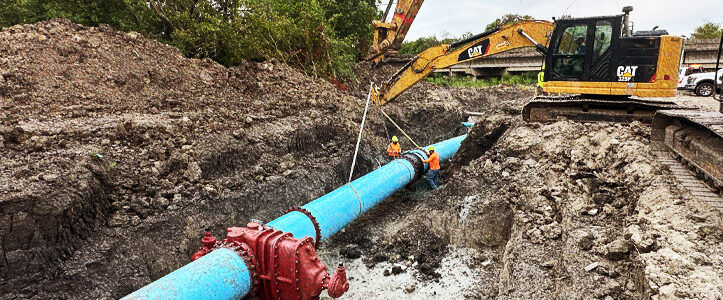
The project centered on a massive logistical and engineering effort: the installation of over 102,000 linear feet of 36-inch fusible C900 PVC pipeline. MH Civil self-performed critical scopes, including excavation, pipe installation, and complex jack-and-bore crossings, including over 1,800 linear feet of 48-inch steel casing.

To stabilize the system and prepare for increased flow, the solution included pump station and header improvements, highlighted by the installation of two 25,000-gallon bladder surge tanks and new ductile iron headers. Throughout construction, MH Civil prioritized stakeholder coordination, managing traffic control, utility locating, and proactive public communication to minimize the impact on local residents and businesses.

The Results

The project successfully modernized Greenville’s primary water artery, expanding the system’s ultimate delivery capacity from 19 MGD to 38 MGD. By Pay Application 26, MH Civil had installed more than 19 miles of 36-inch pipeline and completed dozens of critical valve vaults and drain assemblies.

The impact of this disciplined execution was reflected in the City’s 2025 report, which noted over 129,000 labor hours invested with zero major interruptions to the City’s water service. By blending specialized technical expertise in fusible PVC with proactive project management, MH Civil ensured that Greenville is positioned for long-term growth with a resilient, high-capacity water transmission system.

Amarillo Martin Road Lake

Amarillo Martin Road Lake

Project Overview

Martin Road Lake, originally a natural playa before its designation as a lake in 1952, has been a central feature in Amarillo. Recognizing the need to enhance flood control, improve water quality, and provide recreational amenities, the City of Amarillo initiated a comprehensive improvement project. The project encompasses four phases, with Phases 3 and 4 approved by the Amarillo City Council on January 11, 2022, with a budget allocation of $10.8 million.

The Problem

  • Flood Control: The area surrounding Martin Road Lake has experienced frequent flooding due to inadequate stormwater management systems.
  • Water Quality: Stagnant water and limited circulation have led to poor water quality, affecting local wildlife and recreational use.
  • Recreational Facilities: The existing amenities were outdated, limiting community engagement and use of the lake area.

Our Solution

The project centered on a critical upgrade to the stormwater drainage system, utilizing high-capacity pipes and redirection channels to mitigate frequent local flooding. This infrastructure simultaneously improved water quality by eliminating stagnant zones, boosting oxygen levels for aquatic life, and ensuring safer recreational use.

Beyond engineering, the lake’s perimeter was transformed into a recreational hub featuring extended walking trails, a new sustainable fishing pond, and improved public safety through updated lighting, surveillance, and expanded parking.

The Results

The impact was immediate: flood-related service calls dropped by 65%, while improved dissolved oxygen levels spurred the return of native aquatic species. Community engagement followed suit, with visitor counts surging over 40% within six months as the lake became a hub for local events and recreation.

Key lessons from the project highlighted the value of stakeholder coordination and the cost-efficiency of blending infrastructure with public amenities. By designing for scalability, Amarillo ensured long-term resilience. Ultimately, the Martin Road Lake project proves that thoughtful engineering can solve urban challenges while restoring natural beauty and civic value.

Stamford Transmission Line

Stamford Transmission Line

Project Overview

The City of Stamford identified the urgent need to upgrade its aging raw water infrastructure to ensure a reliable and high-quality water supply for residents. The original raw water pump station and transmission pipeline, dating back several decades, faced frequent failures, capacity constraints, and increasing maintenance costs. To address these challenges, the city launched a comprehensive pipeline replacement and modernization project. MH Civil Constructors, Inc. was selected to lead the construction, bringing their expertise in municipal water line replacement to efficiently execute the project while maintaining the highest quality standards. Their leadership, integrity, and technical expertise were instrumental in ensuring the success of this large-scale project.

The Problem

  • Aging Infrastructure: The existing raw water transmission pipeline had surpassed its useful lifespan, leading to frequent breakdowns and costly repairs.
    Capacity Constraints: The original pipeline was no longer sufficient to meet the city’s growing water demands.
    Water Quality Concerns: Old infrastructure posed potential risks to water quality, necessitating immediate improvements.

Our Solution

After a thorough assessment of the system’s deficiencies, MH Civil implemented a phased installation of over 79,000 linear feet of fusible PVC pipe. Selected for its durability and corrosion resistance, the piping included 14-inch DR-25, DR-21, and DR-18 variants strategically chosen to match specific soil conditions and pressure requirements. The modernized line was stabilized with flowable concrete backfill and integrated with new valves and flushing systems to enhance long-term operability.

Beyond the new installation, the team conducted critical leak repairs on existing 18-inch concrete steel cylinder pipes to prevent water loss during the transition. Throughout the expansive scope of work, MH Civil prioritized safety and environmental protection, utilizing detailed excavation plans to safeguard both the workforce and the surrounding community.

The Results

The project delivered immediate results, substantially increasing Stamford’s raw water capacity to meet both current demands and future growth. The new fusible PVC system provides a resilient backbone that has virtually eliminated emergency maintenance calls. By replacing legacy materials with modern engineering controls, water quality now exceeds state and federal standards while ensuring uninterrupted service for residents.

The success of the project earned high praise from Enprotec / Hibbs & Todd, Inc., who commended MH Civil for their proactive problem-solving and professionalism under demanding conditions. Ultimately, the Stamford Transmission Line serves as a model for modern utility management, proving that collaborative planning and high-performance materials can transform failing infrastructure into a reliable, long-term asset.

Archer City Water Treatment Plant

Archer City Water Treatment Plant

Project Overview

Archer City’s water infrastructure had long been a concern for residents and local officials, with multiple reports from local newspapers highlighting the need for urgent upgrades. Aging equipment, inconsistent water quality, and increasing demand led to growing public frustration. News articles cited issues such as outdated filtration systems, frequent service disruptions, and rising operational costs as major challenges for the city. To address these concerns, the city approved the development of a 1.0 MGD (Million Gallons per Day) water treatment plant, ensuring safe, reliable, and efficient water delivery for its residents. MH Civil Constructors, Inc. was selected to lead the construction due to its strong reputation for professionalism, quality work, and timely project delivery.

The Problem

  • Aging Infrastructure: The existing raw water transmission pipeline had surpassed its useful lifespan, leading to frequent breakdowns and costly repairs.
  • Capacity Constraints: The original pipeline was no longer sufficient to meet the city’s growing water demands.
  • Water Quality Concerns: Old infrastructure posed potential risks to water quality, necessitating immediate improvements.

Our Solution

Selected for their proven track record, MH Civil Constructors, Inc. delivered a 1.0 MGD water treatment plant designed for long-term efficiency and regulatory compliance. The project featured comprehensive ground-up construction, including a new administration building, Parshall flume, twin clarifiers, and a high-performance filter building.

The scope also integrated advanced chemical feed systems, ground storage tanks, and a high service pump station to ensure reliable capacity. Through meticulous planning and proactive coordination, MH Civil completed the facility with change orders totaling less than 1% of the original contract value.

The Results

The Archer City Water Treatment Plant project successfully transformed the city’s infrastructure, expanding capacity to 1.0 MGD while eliminating service disruptions and stabilizing water quality. By replacing aging equipment with energy-efficient systems, the city achieved a 25% reduction in energy usage and exceeded all regulatory standards.

The project was completed ahead of schedule and maintained high public trust through transparent communication and stakeholder engagement. Ultimately, this investment underscored the value of proactive planning and quality construction, delivering a reliable, sustainable utility built to last.

Stephenville Eastside Sewer Interceptor

Stephenville Eastside Sewer Interceptor

Project Overview

The City of Stephenville initiated the Eastside Sewer Interceptor – Phase I to address growing wastewater demands, aging infrastructure, and regulatory compliance requirements. This project was designed to expand system capacity, enhance reliability, and replace outdated pipelines to support the city’s long-term development. The total contract value was $21,956,762, with a well-managed budget and change orders accounting for less than 1% of the original contract amount. The project involved significant trenching (25-60′ deep), tunneling, and large-diameter pipe installations to improve wastewater conveyance efficiency.

The Problem

Insufficient Sewer Capacity: Existing pipelines could not accommodate peak flow demands, increasing overflow risks.
Aging Infrastructure: Deteriorating sewer pipes required frequent maintenance and posed structural risks.
Environmental & Regulatory Compliance: Upgrades were necessary to align with state wastewater regulations.

Our Solution

Collaborating closely with city engineers, we implemented a robust plan to replace deteriorating infrastructure with over 16,200 linear feet of large-diameter Fiberglass Reinforced Pipe (FRP). We strategically selected FRP in 30-inch, 36-inch, and 48-inch sizes to ensure superior corrosion resistance and decades of structural reliability.

The project required extensive technical execution, including trenching at depths of up to 60 feet. In high-traffic and environmentally sensitive areas, we utilized trenchless boring and jacking operations with 48-inch to 60-inch steel casings to minimize surface disruption. Additionally, we installed 41 custom FRP manholes designed to withstand fluctuating loads over the long term.

Where the work impacted community spaces, we provided full restoration through trail reconstruction and hydromulching for erosion control. Through diligent safety coordination and constant communication with city stakeholders, we successfully delivered this critical infrastructure upgrade on schedule and within scope.

The Results

The completion of the Eastside Sewer Interceptor marks a turning point for Stephenville’s infrastructure. The upgraded system has increased capacity by 40%, providing a critical buffer for future growth while eliminating the chronic overflow risks that previously threatened regulatory compliance.

By utilizing durable FRP materials, we have extended the system’s operational lifespan by an estimated 50 years, significantly reducing long-term maintenance burdens. This project also serves as a model for fiscal responsibility; with a total contract value of $21.96 million, change orders accounted for less than 1% of the original estimate.

Ultimately, this project highlights the value of strategic execution and premium materials. Stephenville now possesses a resilient, future-ready interceptor system built on a foundation of engineering excellence.